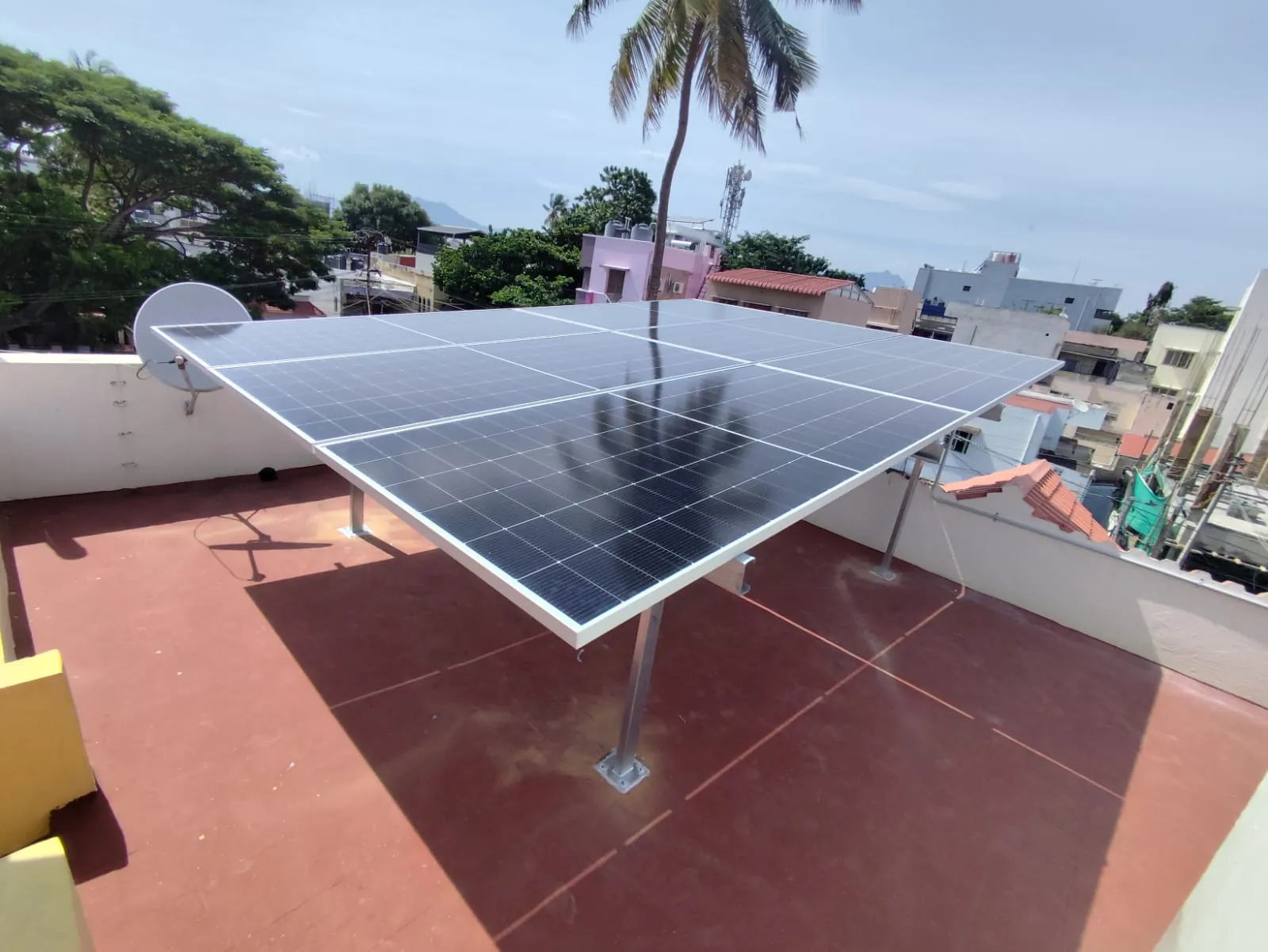
Independent house
- Location
- Hope College, Coimbatore
- System
- 3 kW on-grid
- Components
- Panel · inverter · elevated structure
- Design note
- 4:3 north–south inclination
- Result
- 16 units produced per day
Use your electricity consumption to discover the approximate solar capacity that may suit your home, understand the subsidy that may apply, and see what your investment could look like — before anyone quotes you a price.
Estimate using current TNPDCL domestic slabs. Your bill amount may differ slightly.
Quotes usually start with a price. A good decision starts with understanding. These are the gaps we help you close first.
Bigger isn't always better. The right kW depends on your units, your slab and your roof — not on the biggest subsidy.
For some homes solar pays back quickly. For very low-usage homes, free units already cover most of the bill.
Two "3 kW systems" can differ widely in inverter, structure, cabling, earthing and protection.
Design, workmanship, paperwork and after-sales decide how your system performs for the next 25 years.
Short, plain-language explainers from the Sunfarm team. No sales pitch. Tap any card to watch.
Enter your electricity usage and we'll suggest an approximate rooftop solar capacity to explore — with every assumption shown.
You use about 700 units every two months (≈350 a month). A 2 kW system is estimated to generate 433–500 units per bi-month — enough to bring your grid usage down towards Tamil Nadu's 200 free-unit band, where most of the saving is. Going bigger adds cost but little extra saving for your usage.
| Size | Price | Potential subsidy | Net investment | Yearly saving | Payback |
|---|---|---|---|---|---|
| 1 kW | Assess | ₹35,000 | — | ₹15,550 | — |
| 2 kW | ₹1.6 L | ₹70,000 | ₹90,000 | ₹23,160 | 3.9 yr |
| 3 kW | ₹1.95 L | ₹1 L | ₹95,000 | ₹24,150 | 3.9 yr |
A free site visit confirms roof space, shading, sanctioned load and the exact subsidy you can apply for.
All figures are estimates, not a quotation or guarantee. Potential subsidy is subject to eligibility, applicable scheme guidelines, capacity and government/DISCOM approval.
Subsidy is paid by the government directly into your bank account after your system is installed, inspected and approved. It is not a discount from Sunfarm — so we show it separately.
| 1 kW | ₹30,000 |
| 2 kW | ₹60,000 |
| 3 kW and above | ₹78,000 (cap) |
For residential consumers installing grid-connected rooftop solar through a registered vendor, using domestically manufactured (DCR) panels. Capacity above 3 kW gets no additional central subsidy.
| 1 kW | ₹5,000 |
| 2 kW | ₹10,000 |
| 3 kW and above | ₹22,000 |
Announced by the Tamil Nadu Energy Department (G.O. (Ms) No. 102, Sept 2026), disbursed by TEDA. Reported to apply to residential consumers who registered on the PM Surya Ghar portal on or after 05.08.2026, for a limited number of applicants. We confirm current status for you before you commit.
Not every home automatically receives ₹78,000 + ₹22,000. The amount depends on your eligibility, system capacity, sanctioned load, whether you've claimed before, and approval by the government and TNPDCL.
· Official source: pmsuryaghar.gov.in
Tap each part to see what it does and what to ask about it. These are the parts cheaper quotes most often cut corners on.
Two quotes for the same kW can describe very different systems. Ask every installer — including us — to answer the right-hand column in writing.
| Item | A price-only quote often says | A complete-value quote tells you |
|---|---|---|
| Panels | "3 kW panels" | Brand, wattage per panel, technology (e.g. mono PERC / TOPCon), DCR status, number of panels, performance warranty |
| Inverter | "On-grid inverter" | Brand, rated kW, efficiency, monitoring app, warranty years, local service availability |
| Mounting | "Structure included" | Material (hot-dip galvanised / aluminium), coating thickness, height, wind-load design, anchoring method |
| Cables | "Wiring" | Solar-grade DC cable size, AC cable size, conduits and routing |
| Earthing | Not mentioned | Number of earth pits, type, lightning arrester |
| Protection | Not mentioned | DCDB and ACDB with surge protection (SPD), fuses and MCBs |
| Engineering | — | Shadow analysis, panel layout, tilt and orientation, expected generation |
| Installation | "Installation free" | Who installs (own team or subcontractor), safety practice, timeline |
| Paperwork | — | Portal registration, TNPDCL net-meter application, inspection and subsidy claim support |
| After-sales | "Service available" | Response time, who to call, periodic checks, warranty claim handling |
A solar system is a long-term investment. The quality of the components, design and installation matters just as much as the number of panels on your roof.
Timelines depend on TNPDCL and portal approvals. We keep you updated at every step.
We review your EB bill and visit your roof: space, shading, structure, sanctioned load.
System size, panel layout, component list and expected generation — itemised in writing.
We help you apply on the PM Surya Ghar national portal and for TNPDCL feasibility.
Structure, panels, cabling, protection and earthing — usually 1–3 days on site for a home.
TNPDCL inspects the system and installs the bi-directional net meter.
After commissioning, we help you submit bank details and documents for the subsidy.
Walkthrough, monitoring app setup, warranty documents and cleaning guidance.
Periodic checks, generation reviews and warranty claim handling.
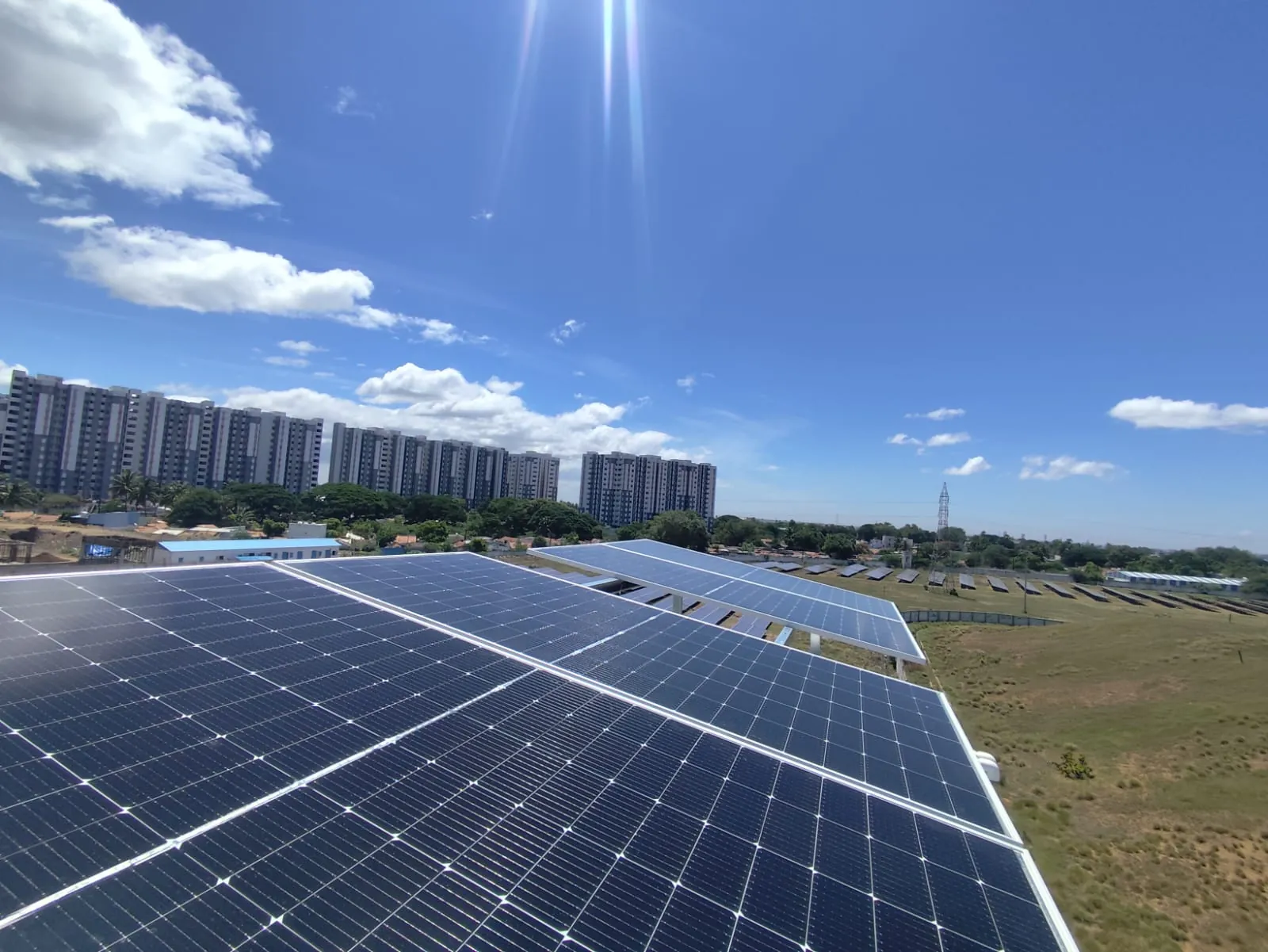
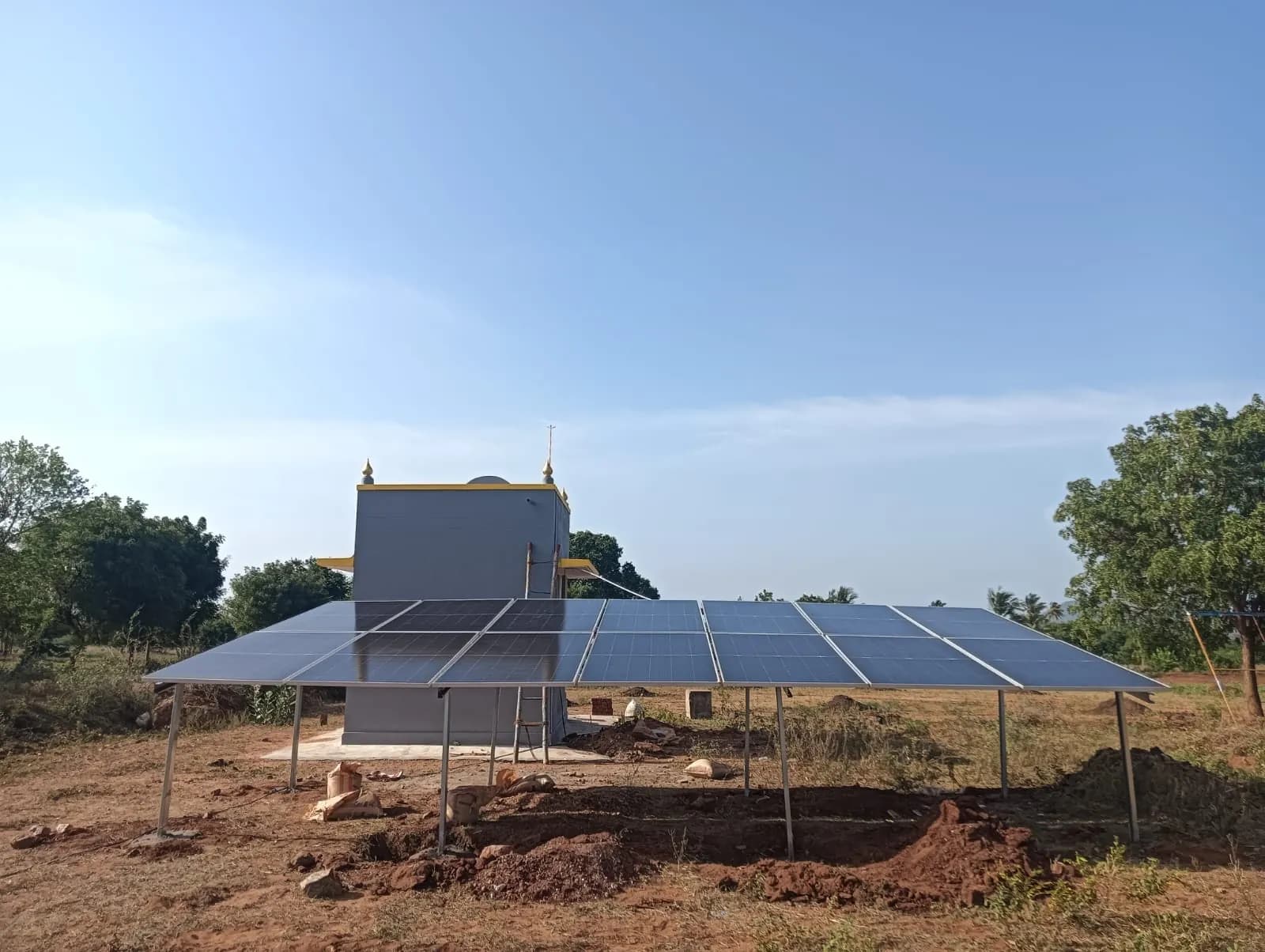
Each project shows the home, the system, the components and why we designed it that way. Results are shown only where the customer has shared verified data.
We publish only stories from real Sunfarm customers who agreed to share them — ideally on video, in their own home, with their EB bill before and after. Each story follows the same honest structure:
Who they are, where they live
What their bill and worries were
Why they chose this size and Sunfarm
How the work went
Life with solar, support received
Bills before and after, verified
Tick off what you already know. Anything unticked is a question to ask every installer.
0 of 7 answered
We'll send the full checklist (with the questions to ask) on WhatsApp.
Indicative Sunfarm system prices, with potential subsidy shown separately. Your final price depends on site conditions, structure height, cable runs and current component prices.
Homes using ~450–650 units per bi-month
| Indicative system price | ₹1,60,000 |
| Potential central subsidy* | − ₹60,000 |
| Potential TN top-up* | − ₹10,000 |
| Potential net investment | ₹90,000 |
₹1,00,000 if the state top-up does not apply. Generation ≈ 2,600–3,000 units/yr.
Ask about 2 kWHomes using ~650–900 units per bi-month
| Indicative system price | ₹1,95,000 |
| Potential central subsidy* | − ₹78,000 |
| Potential TN top-up* | − ₹22,000 |
| Potential net investment | ₹95,000 |
₹1,17,000 if the state top-up does not apply. Generation ≈ 3,900–4,500 units/yr.
Ask about 3 kWHomes using ~1,100+ units per bi-month
| Indicative system price | ₹2,95,000 |
| Potential central subsidy* | − ₹78,000 |
| Potential TN top-up* | − ₹22,000 |
| Potential net investment | ₹1,95,000 |
₹2,17,000 if the state top-up does not apply. Generation ≈ 6,500–7,500 units/yr.
Ask about 5 kWShare a few details and your latest EB bill. A Sunfarm solar engineer will verify the recommendation, confirm your likely subsidy and explain your options.
It depends on your units. In Tamil Nadu, 1 kW generates roughly 110–125 units a month. Most homes size the system to bring grid usage down to the 200 free-unit band — use the calculator above for your number, and we confirm it on a site visit.
A system connected to the TNPDCL grid through a net meter. Your home uses solar power first; surplus goes to the grid, and you draw from the grid at night. There are no batteries.
An on-grid inverter switches off automatically during a grid outage so no power flows into lines being repaired. If you need backup, ask about a hybrid system with batteries.
A bi-directional meter records units you import and export. Your bill is based on the difference, as per current TNERC and TNPDCL rules.
Central subsidy is up to ₹78,000 (₹30,000 for 1 kW, ₹60,000 for 2 kW, ₹78,000 for 3 kW and above). Tamil Nadu has announced up to ₹22,000 extra for eligible applicants. Final amounts depend on eligibility and approval.
Residential consumers with their own connection and suitable roof, who have not claimed rooftop solar subsidy before, installing DCR panels through a registered vendor. Commercial buildings are not eligible.
On-site work for a home is usually 1–3 days. The full process including portal approval, TNPDCL inspection and net meter can take a few weeks.
Roughly 80–100 sq ft of shade-free area per kW. A 3 kW system typically needs about 250–300 sq ft. Elevated structures can help on busy terraces.
Generation drops but doesn't stop. The grid covers the gap automatically. Our estimates already use yearly averages that include cloudy and monsoon days.
Rinse the panels with plain water every 2–4 weeks (more often in dusty areas), and have an annual check of connections, earthing and the inverter.
Good panels work for 25 years or more, slowly losing about 0.5% output per year. The panel maker's performance warranty covers this — we list the exact terms in your quote.
Panels and inverters carry manufacturer warranties, and installation workmanship is covered separately. Exact terms vary by component and are written into your quote.
You keep receiving grid power, so your home isn't affected. We diagnose the fault and handle the warranty claim with the manufacturer.
Often yes, if roof space, inverter capacity and your sanctioned load allow. Subsidy is one-time, so tell us about future plans (like an AC) before we size your system.
An individual flat usually can't install unless it has roof rights. Residential associations can install solar for common areas; separate provisions apply. Ask us to check your building.
Look for DCR panels from established makers, a reputable inverter with local service, and clear warranties. Use the component guide above and ask every installer to list models in writing.
We walk you through the system at handover, set up monitoring, and remain your contact for generation checks, maintenance and warranty claims.
Share your electricity bill with our solar team. We'll help you understand the approximate capacity, applicable subsidy, system options and next steps — without pressure.